Collaborations Continue as Toyota, Subaru Team up to Develop an Electric Crossover and EV Platform
Automakers are heading into uncharted territory in an effort to stay ahead of the EV shift that seems to be inevitable. We’ve seen Ford, VW, Hyundai, and others all strike partnerships with EV companies to help fast-track their own vehicle development.
We can add yet another partnership to the list, as Toyota and Subaru are jointly working on developing a RAV4-sized EV, with each manufacturer set to have their own version of the model. They’re also said to be developing a general EV platform that will be utilized by each manufacturer for additional models. This platform is expected to be used for everything from small sedans to large SUVs going forward.
The mutually beneficial partnership will see Subaru lend their expertise on AWD capabilities, while Toyota will bring their knowledge of EV powertrains to the table. This being so, it goes without saying that their new crossover EVs will come with an AWD option.
The automakers jointly stated, “Subaru and Toyota believe that it is necessary to pursue a business model that goes beyond convention, crossing over industrial boundaries.”
May 2019
FCA Presents $35 Billion Merger Proposal to Renault
The deal would make the duo the third largest conglomerate in the global auto industry, falling in behind Toyota and Volkswagen. Latest reports say that Renault is reviewing the FCA proposal with interest.
Of course there are plenty of complications that would need to be ironed out before this deal can be completed. A potential holdup could come in the form of Renault’s current association with Nissan, which although on shaky ground since the former chairman Carlos Ghosn’s arrest last year, is still intact for the time being. There’s also the part about the French Government holding a 15% stake in Renault, which will greatly factor into the decision making process.
The partnership would be mutually beneficial for the two automakers that have fallen a bit behind their competitors. The main strengths of the FCA portfolio come in the form of trucks and SUVs. Their RAM and Jeep brands are entrenched in the US, but fall short when it comes to the European market. Conversely, Renault has no US presence, but has an established line of electric and fuel efficient engines, as well as a strong presence in non-US markets. Combining the two would seemingly sure-up some aspects of their offer
It has become more common for manufacturers to team up in mutually beneficial partnerships. We’ve seen this with Ford and VW, and even more recently, Ford and Rivian. From a consumer’s standpoint, these partnerships present exciting opportunities for new product offerings and quicker concept-to-market timelines.
If it were to happen, this merger would not be fast moving and it could still be well over a year until we see it finalized.
May 2019
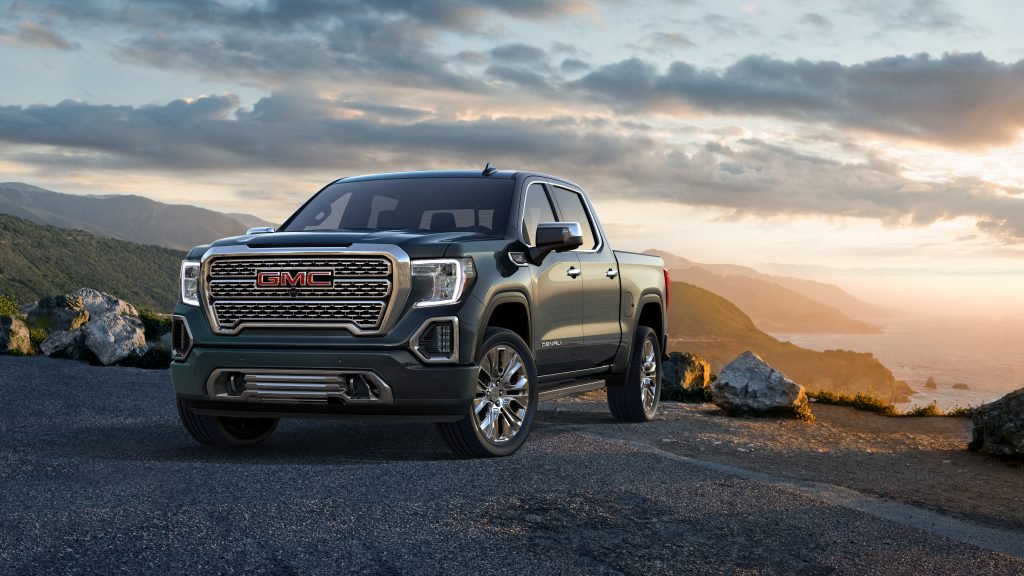
GMC Reveals Updates to 2020 Sierra 1500
It comes as no surprise that GMC is continuing use of the MultiPro for the 2020 Sierra model year. Upon its release, the tailgate was a huge hit and had other manufacturers scrambling to update theirs. Even after completely redesigning the Sierra for 2019, GMC comes back just a year later with some major updates. This continued progression is what we like to see.
The industry-fist carbon fiber bed, dubbed CarbonPro, is set to be an option for both 2019 and 2020 model years as well. However, GM will only produce 500 for 2019, mostly due to production constraints as they continue to adapt the process for the new parts. This option will also come with a hefty price tag, as it’s currently only available at the AT4 ($66k) and Denali ($70k) trim levels. We’re anticipating GM to offer this option on lower trim levels in the future, and potentially even other GM pickup models.
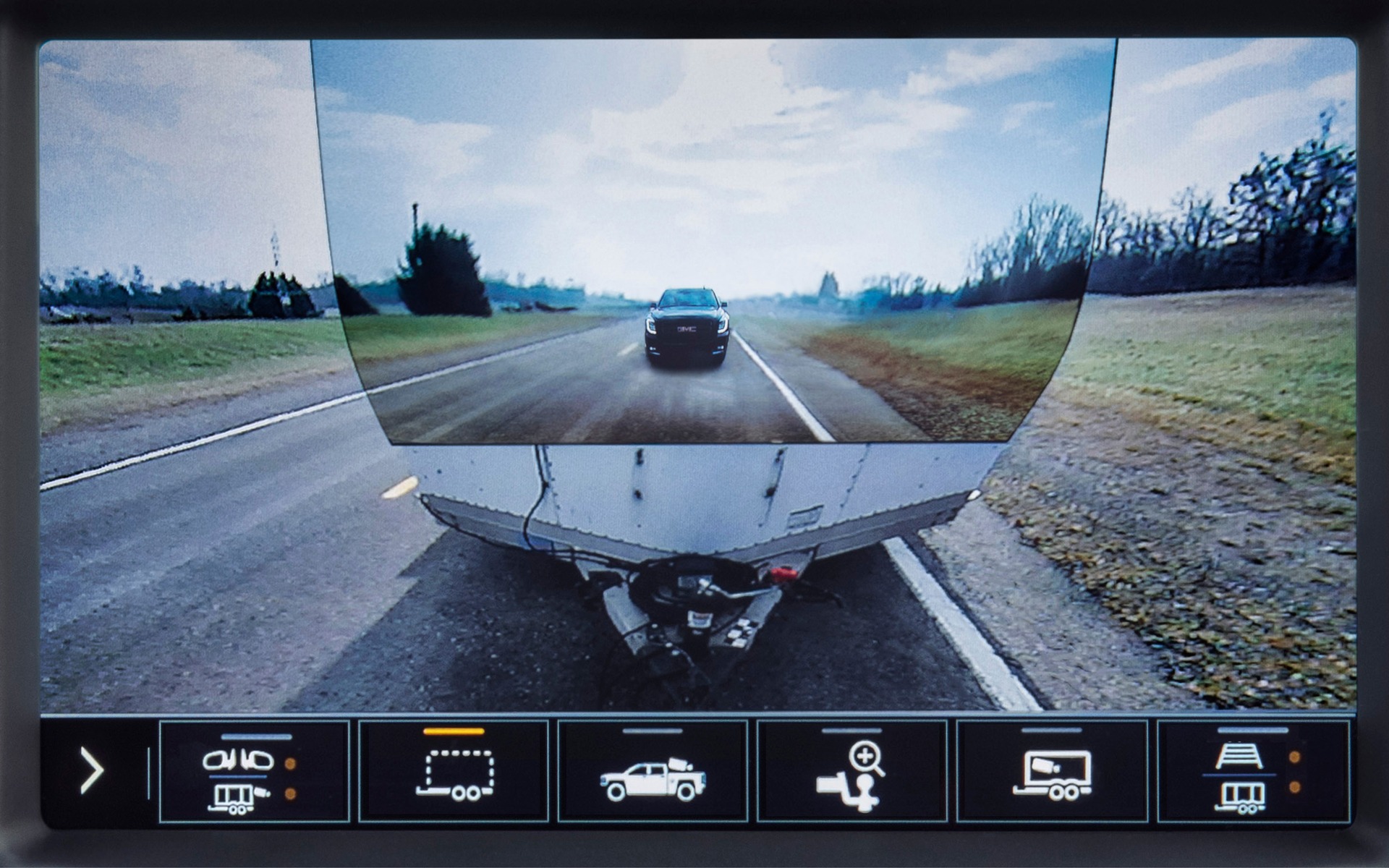
Technology updates are the status quo for new model releases. Regardless, they’re still worth mentioning. To start with, the 2020 Sierra can be equipped with adaptive cruise control, a first for the Sierra. Earlier this year we got a peek at the all-new HD Sierras which included a ProGrade Trailering System. This system is also available on the 1500s for 2020. It uses multiple cameras to give the drivers 15 different views of the trailer as well as the surrounding area. It even has transparent trailer view that uses cameras to allow for a virtual view through the trailer.
Transparent Trailer View
The 10-speed automatic transmission is now available on the 5.3L V8 for the first time. And due to delays in the emission certification process, the new 3.0L Duramax I6 turbodiesel engine that was supposed to be for 2019 will not debut on the 2020 Sierra. When paired with the 10-speed transmission, the I6 produces 277hp and 460 lb.-feet of torque, even at a meager 1,500 rpms.
The 2019 Sierra is set to be produced with the CarbonPro bed this summer, while the 2020 model will go no sale later this year.
Apr 2019
Rivian Gets a $500 Million Boost From Ford Motor Co.
The electric revolution continues as Rivian just announced a $500 million investment from Ford Motor Co.
This deal comes shortly after the news of Amazon investing $700 million in the start-up. It also comes on the heels of the breakdown of the planned investment from General Motors. Rivian currently has two production-ready models with the R1S SUV and the R1T pickup truck.
“This strategic partnership marks another key milestone in our drive to accelerate the transition to sustainable mobility,” said RJ Scaringe, Rivian founder and CEO. “Ford has a long-standing commitment to sustainability, with Bill Ford being one of the industry’s earliest advocates, and we are excited to use our technology to get more electric vehicles on the road.”
Ford will utilize the Rivian platform to develop an EV of their own, potentially the F-150 that has been rumored. While no additional details have been provided by Ford, it’s a logical assumption that Rivian’s skateboard platform would pair with the proposed F-150. There’s also the chance that the Rivian platform could be utilized for Ford’s Mustang-based crossover EV.
Earlier this year, elecrek.co published an article detailing how there are currently several undercover F-150s on the Rivian platform being used as test mules. This deal could significantly speed up Ford’s EV product development timeline. Ford is also in ongoing discussions with Volkswagen regarding electric vehicle production.
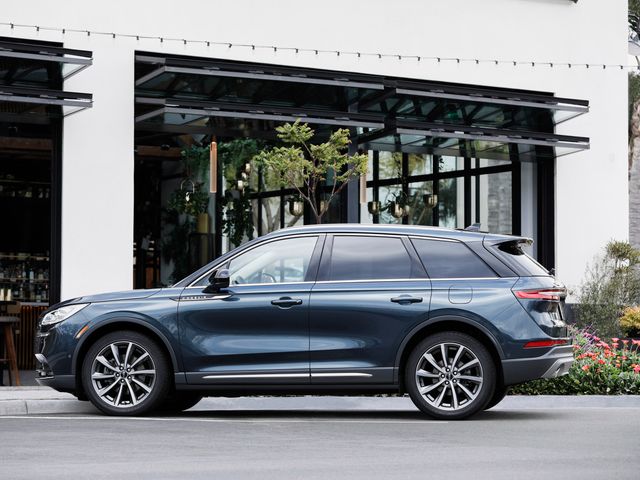
Lincoln’s overhaul of their SUV lineup looks to be nearing an end with the release of the all-new Corsair. Following the Aviator, Nautilus, and Navigator, the replacement for the MKC has been revealed in full, and the look of this small SUV is incredibly appealing. It’s essentially a smaller Aviator, sporting a strong front end, a wide-stance, and a gently sloping roofline.
While this vehicle is built on the same front-drive platform as the Escape, that’s essentially the only similarity between the two. The Corsair comes standard with Ford’s 2.0L turbocharged inline-four cylinder engine, which comes as the top tier engine on the Escape. This produces 250 horsepower and 275 pound-feet of torque.
There’s also a high-performance 2.3L turbo I4 that puts out 280hp and 310 lb-feet of torque, which comes standard on the AWD model. The AWD system also received some upgrades and has the ability to shift 100% of the power to the front or rear axles depending on need. And as a third offering, there’s said to be a hybrid in the works, though no formal announcement has been issued.
The interior follows the path of Lincoln’s larger SUVs, something we’re grateful for. Some of the unique aspects include a center stack that extends outward from the dash, standard sliding and reclining rear-seats, an active noise cancelling system, and an air vent that runs the length of the dashboard.
The Corsair will go on sale in fall of 2019 and will be built in Louisville, KY. Pricing is expected to be announced later this summer.
Apr 2019
Canadian Government Outlines Plan for Expansion of Zero-Emission Vehicles
The Canadian Minister of Finance recently released his government’s fourth and final budget in the House of Commons prior to the 2019 election. An aspect of this budget was centered on the expansion of zero-emission vehicles (ZEVs). The plan detailed the government’s goal to sell 100% ZEVs by 2040, 30% by 2030, and 10% by 2025.
A number of incentives were announced that should help to increase the adoption rate for these vehicles. These incentives include:
Budget 2019 introduces a new federal purchase incentive of up to $5,000 for electric battery or hydrogen fuel cell vehicles with a MSRP of less than $45,000. Transport Canada will administer the incentive program through $300 million of funding over the next three years.
Businesses will be eligible to fully deduct the capital of costs of ZEVs up to a limit of $55,000 in the first year of investment, effective immediately and before Jan. 1st, 2024.
Over 5 years, beginning in 2019-2020, $130 million will be invested to deploy new charging and hydrogen fuel refueling stations across the country
Budget 2019 proposes to provide $5 million over 5 years, starting in 2019–20, to Transport Canada to work with auto manufacturers to secure voluntary zero-emission vehicles sales targets to ensure that vehicle supply meets increased demand.
Automotive manufacturers and parts suppliers can access funding through the Strategic Innovation Fund, which was recently provided $800 million in additional funding through the 2018 Fall Economic Statement for investment in zero emission vehicles.
Apr 2019
2020 Ford Escape Debuts with New Look, Unique Engine Offerings
As Ford moves forward with the overhaul of their lineup, the all-new Escape looks to be primed to take over the role of the Fusion as the go-to passenger vehicle for the automaker. The size, pricing, and efficiency of the Escape make it an attractive option for sedan and SUV lovers alike.
Ford made a concerted effort to improve the look and feel of the interior, resulting in some major changes. They increased both the visibility and interior space. The rotary gear shift was moved to a more convenient position, allowing for more storage compartments. The second row is equipped with a sliding and reclining feature that lets you opt for more cargo space or more legroom. The bench moves 6” forward or backward and is even equipped on the hybrid and PHEV models, which have the batteries stored below the bench.
The engine offerings also seemed to be a major focus. Options include a 1.5L turbo three-cylinder, a 2.0L turbo four-cylinder, a hybrid, and a plug-in hybrid. The three-cylinder engine includes a cylinder deactivation feature that increases efficiency by 6% according to Ford.
The PHEV has a 14.4 kWh battery pack and will reach a full charge on a Level 2 charger in around 3.5 hours. No official numbers have been released on the electric range of the plug-in hybrid, but it’s expected to be in the area of 30 miles. The PHEV is the only model that does not have an AWD option.
A unique aspect of the PHEV is the ability to control when the electric engine is used. “Auto EV” allows the vehicle to decide when to utilize the electric engine. “EV Now” does exactly what it sounds like and engages the EV engine. “EV Later” forces the Escape to use the gas engine, and the “EV Charge” setting allows you to charge the battery while driving.
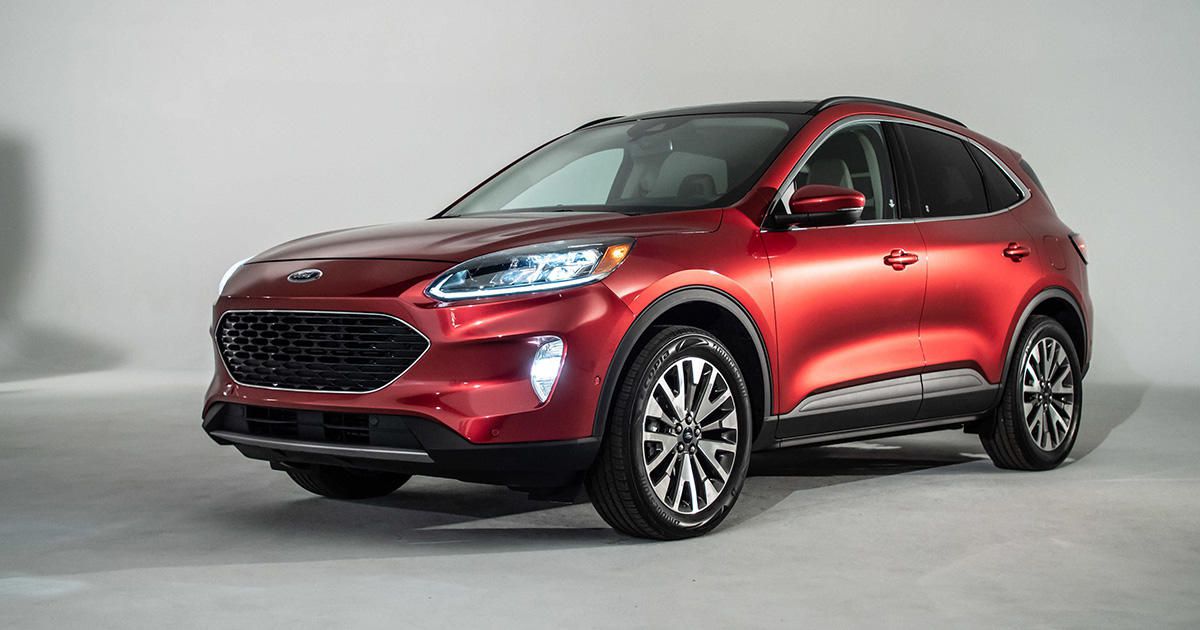
The 4th generation Escape is longer, wider, and lower than the previous model. The physical appearance is far less rigid than the previous model and has cues from some other Ford Motor Co. products. You can see hints of the new Lincoln SUV’s from the side and rear, and the front looks a bit similar to the Fiesta.
Technology upgrades were abundant and include an 8” infotainment screen, a 12.3” digital instrument display, and a 6” heads-up display, all of which are optional features. All trim levels come standard with Ford Co-Pilot 360, which includes automatic emergency braking and lane-keeping assist, but options such as adaptive cruise control and actual lane-centering are available at an extra charge.
The all-new Escape will be available in fall of 2019.
Mar 2019
Ford Investing Heavily in EVs, AVs, and Next-Gen Mustang Production
Ford Motor Co. announced on Wednesday that $850 million is set to go towards their Flat Rock plant to create electric vehicle production capabilities at the location. This move will result in the addition of a second shift and 900 jobs through 2023.
Ford also revealed plans for a facility in Southeast Michigan that will focus on autonomous vehicle production starting in 2021.
The EVs set to be built at the Flat Rock location isn’t the Mustang-based utility vehicle that is reportedly scheduled to debut in 2020, as that vehicle will be built in their Cuautitaln, Mexico plant. However, it comes as no surprise that Ford is working to add EV-production capabilities to their plants. They announced in January 2018 that they plan to invest $11 billion in electric vehicles through 2022, with their offerings projected to include 40 hybrid and fully electric vehicles by that time.
“We’ve taken a fresh look at the growth rates of electrified vehicles and know we need to protect additional production capacity given our accelerated plans for fully electric vehicles,” said Joe Hinrichs, Ford’s president, Global Operations.
EMKAY Continues Longstanding Partnership with JDRF
Throughout our partnership that now spans 13 years, EMKAY has contributed over $770,000 to the Juvenile Diabetes Research Foundation (JDRF). This venture is incredibly important for countless families and we’re honored to have a strong relationship with an organization such as this.
Year-over-year we’ve seen our contributions substantially increase. Though any amount is greatly appreciated, we’re very proud to have seen our donations grow from $4,833 in 2006 to over $120k in 2018, or best year yet.
We’re excited to see this partnership continue its growth in the coming years!
To learn more about JDRF, or to donate, go to www.jdrf.org
Mar 2019
Ford Revamps Super Duty Lineup; Adds F600
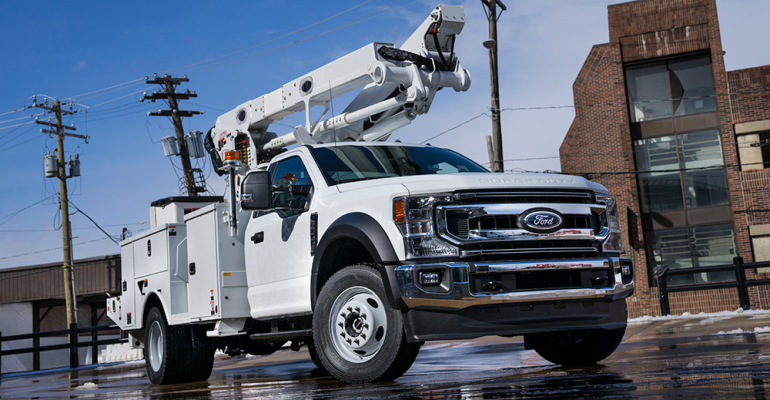
Ford has wrapped up their super duty revamp with the announcement of an all-new F600, fitting into their lineup of super duties between the F550 and F650.
The F600 is physically the same size as the F550. Where it differs is in the driveline, chassis, wheels, and tires. These changes kick the F600 up to a max GVWR of 22,000 lbs., making it a Class-5 truck that delivers the capabilities of a Class-6.
Both gas and diesel engines are available as well as 4×2 and 4×4 drivetrains. The engines range from a 7.3-liter gas V8, a third-generation 6.7-liter Power Stroke® diesel, and a 6.2-liter gas V8. An all-new 10-speed TorqShift® automatic transmission is available across all engine offerings.
It comes as no surprise that a focus was also on updating the technology and safety features. Smart driver assist technologies, such as automatic emergency braking, adaptive cruise control, electronic stability control, lane departure warning, Driver Alert System, and auto high-beam headlamps, are available on all Ford commercial vehicles. Factory installed modems come standard on all commercial vehicles, allowing for 4G LTE Wi-Fi. This feature opens the door for companies to utilize the new Ford TelematicsTM and Ford Data ServicesTM solutions.
Orders for the F600 will begin in early 2020, with deliveries scheduled to begin in mid-2020.
A link to the official announcement from Ford is below:
Thank you for your interest in EMKAY, we will try and get back to as shortly as possible.
Our site uses cookies so that we can remember you and understand how you use our site. If you do not agree with our use of cookies, please change the current settings in your privacy preferences. Otherwise, you agree to the use of the cookies as they are currently set.
This website uses cookies to improve your experience while you navigate through the website. Out of these cookies, the cookies that are categorized as necessary are stored on your browser as they are essential for the working of basic functionalities of the website. We also use third-party cookies that help us analyze and understand how you use this website. These cookies will be stored in your browser only with your consent. You also have the option to opt-out of these cookies. But opting out of some of these cookies may have an effect on your browsing experience.



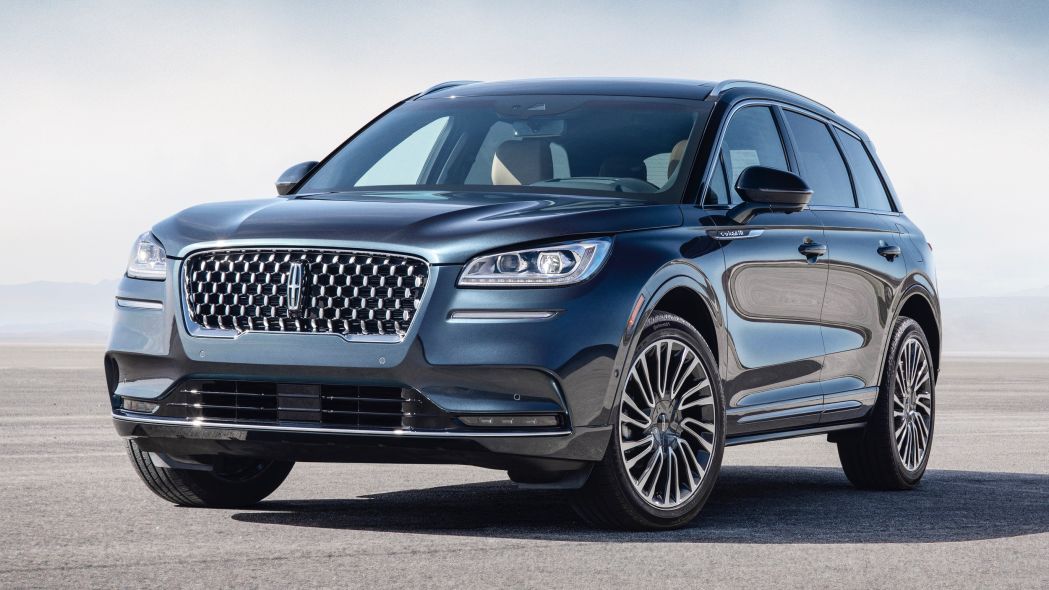 Lincoln’s overhaul of their SUV lineup looks to be nearing an end with the release of the all-new Corsair. Following the Aviator, Nautilus, and Navigator, the replacement for the MKC has been revealed in full, and the look of this small SUV is incredibly appealing. It’s essentially a smaller Aviator, sporting a strong front end, a wide-stance, and a gently sloping roofline.