Ontario set to Initiate Harsher Distracted Driving Penalties
According to the Ministry of Transportation of Ontario (MTO), the distracted driving changes made under the Cannabis, Smoke-Free Ontario and Road Safety Statute Law Amendment Act back in 2017 are set to go into effect January 1, 2019. The MTO outlined the coming changes as follows:
Drivers in Ontario who are caught texting, dialing, emailing, or talking on their phones will be fined up to $1,000, will receive a three-day license suspension, and three demerit points.
Drivers with more than one distracted driving conviction will face a fine of up to $2,000, a seven-day license suspension, and six demerit points,
Any person caught driving distracted more than two times will pay a fine of up to $3,000 and will lose their license for 30 days.
As reported by CBC News, Jeff Yurek, Ontario’s minister of transportation, stated “Ontario’s roads are among the safest in North America, but we also know distracted driving continues to be a serious issue.” Once the new legislation goes into effect, “Ontario will have the toughest penalties for repeat distracted driving convictions.”
GM Announces Possible Closure of Five Plants Due to New Direction
As the future of the automotive industry continues to take shape, GM has announced a major change to their North American infrastructure. The plan includes the closure of up to five plants throughout North America, as well as two more outside the continent. This reduction is tied in part to GM’s model cuts, which include the Buick Lacrosse, Cadillac’s CT6 and STS, and Chevrolet’s Cruze, Impala, and Volt. The shut downs would result in a 15% cut in GM’s North American workforce, roughly 8,000 employees.
“The actions we are taking today continue our transformation to be highly agile, resilient and profitable, while giving us the flexibility to invest in the future,” said GM Chairman and CEO Mary Barra. “We recognize the need to stay in front of changing market conditions and customer preferences to position our company for long-term success.”
GM expects to experience $6 billion in savings by 2020 due to these moves. According to the automaker, they’re projecting these savings based on a plan to transform product development, optimize product portfolio, increase capacity utilization, and through a staffing transformation.
According to the automaker,
Our newest products – from the Chevrolet Traverse and Blazer to the Cadillac XT4 crossover – are in growth segments.
We continue to expand our truck portfolio, including an all-new Silverado LD work truck, the all-new Silverado medium duty models and an all-new Silverado HD launching next year.
We are not exiting the passenger car business. At Chevrolet, for example, the Spark, Sonic, Malibu, Camaro and Corvette are not impacted by today’s announcements. And we are investing in a plant in Lansing to build the next generation of Cadillac luxury cars.
Our vision remains a world with zero crashes, zero congestion and zero emissions, and we continue to drive innovation in vehicle electrification with products like the Chevrolet Bolt EV.
The official announcement on GM’s website can be found here:
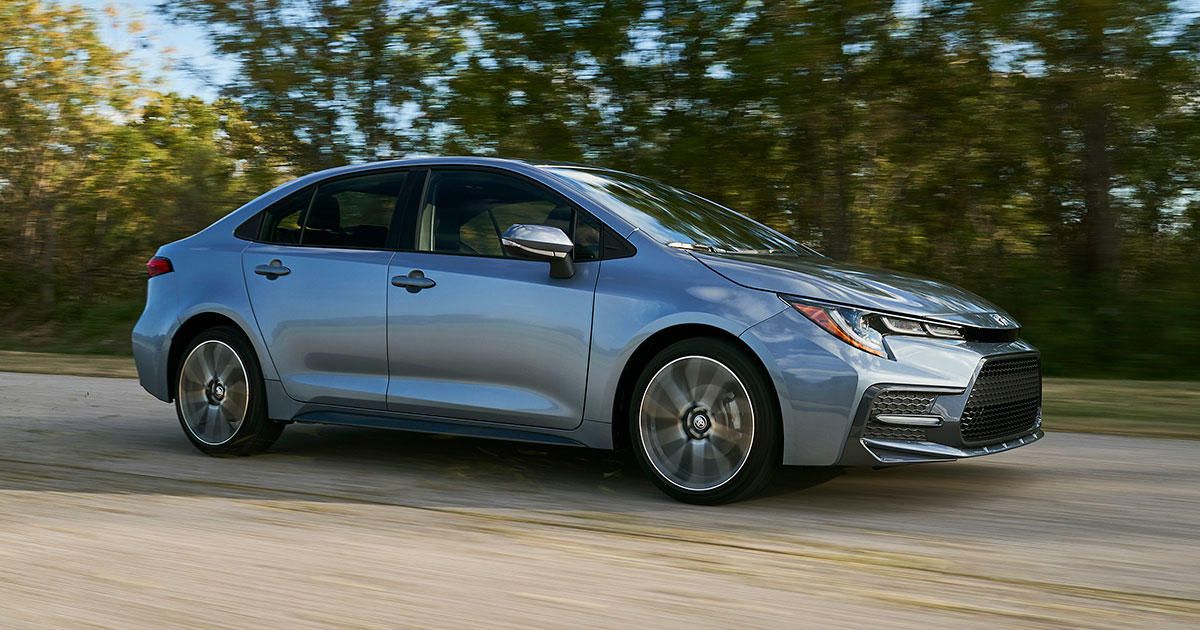
Details on the all-new 2020 Corolla have been released and there were some major changes to the look and feel of this vehicle. Both the hatchback and the sedan models are both built on the Toyota New Global Architecture (TNGA), which according to Toyota, “[brings] together new approaches to engineering, design, assembly, and materials.”
The 1.8L engine is still the standard, however it’s said to generate more power while offering better fuel efficiency. The XSE and SE trims are equipped with an all-new 2.0L Dynamic-Force inline four cylinder engine. Some highlights of the new Corolla include:
All-New TNGA platform
Safety Sense 2.0 – Standard on all trim levels
First-time Hybrid grade offering
Toyota Connected
The Corolla is available for ordering starting January 2019. The full press release on the Toyota website can be found here:
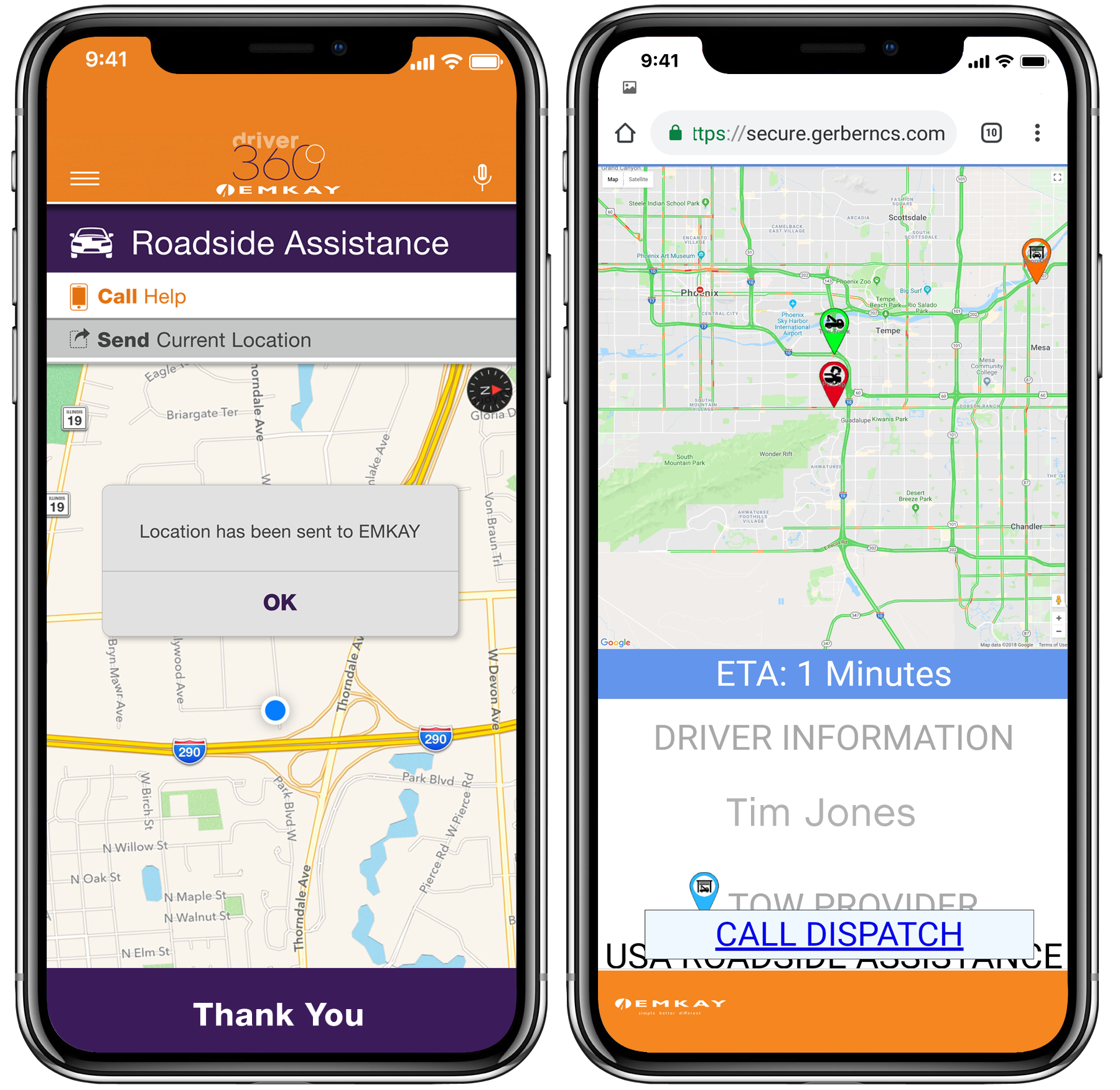
Drivers in need a roadside assistance or towing now have access to a feature that enables them to monitor and track the location of the vendor assigned to assist them. When a driver calls for roadside service or towing, they will be asked if they would like to be able to track their vendor during the process.
Upon agreeing, the driver is texted a link that will open a real-time map that shows their location (in red), the tow truck location (in green) and, if being towed, the location of where the vehicle will be towed (in orange). It will also provide the name of the vendor.
If at any time the driver has a question, there is a button below the map that puts them in contact with our roadside service provider. This new feature is currently available for cars and light trucks only and primarily in major metro areas. This feature is available to all EMKAY drivers and there is no additional charge to utilize this tracking system.
Oct 2018
EMKAY’s Partnership with CarbonFund.org Continues for Carbon Neutral Initiatives
EMKAY’s partnership with CarbonFund.org continues to help companies expand their green initiatives through GoGreen, a program that allows them to be carbon neutral. Since the partnership began in 2010, the GoGreen program has neutralized over 20 million pounds of carbon dioxide emissions.
We are very proud of our efforts to increase sustainability and reduce the carbon footprint of our customers. CarbonFund.org recently posted about this partnership on their website:
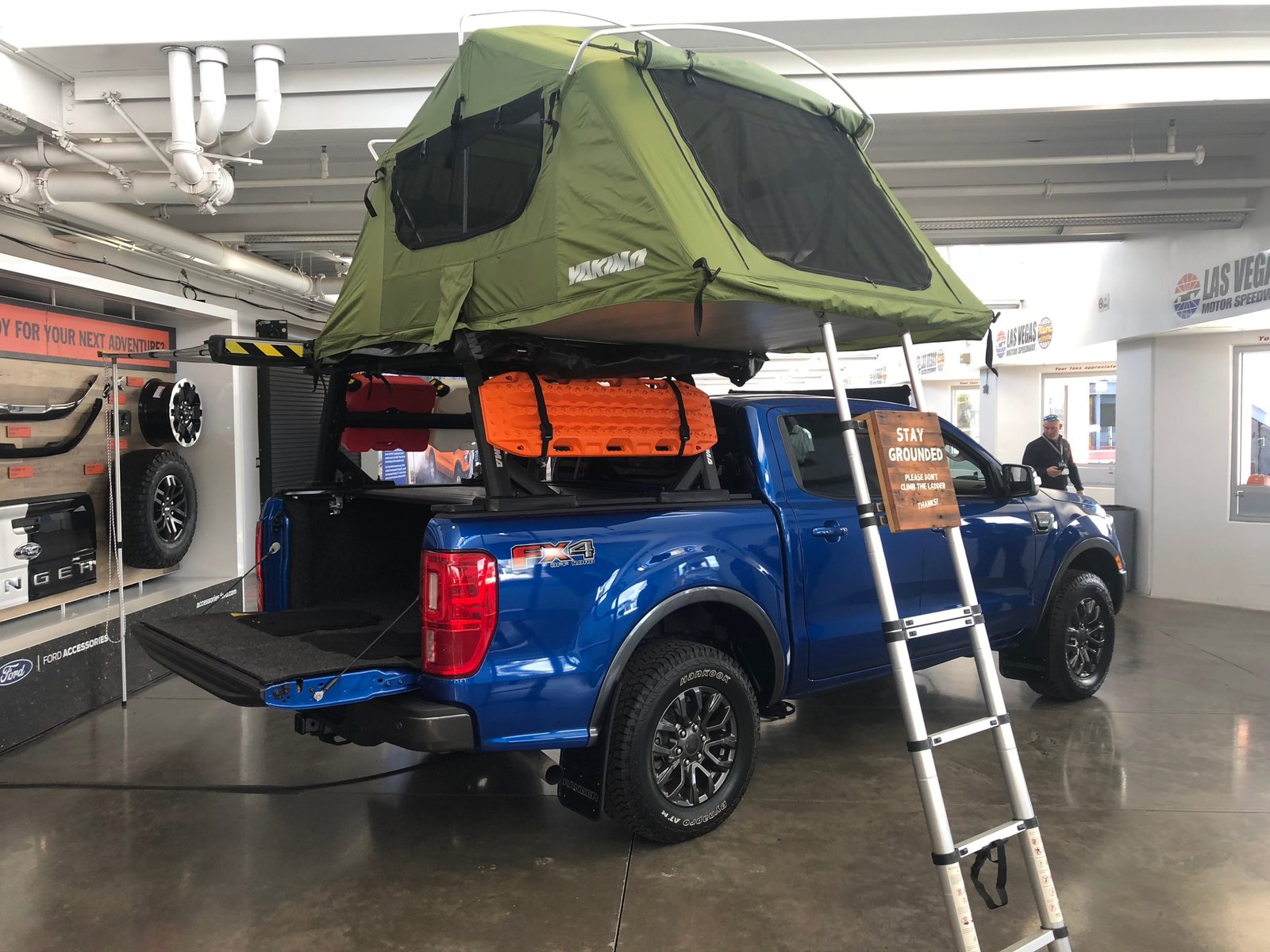
A list of available accessories on the 2019 Ford Ranger has been leaked and is causing some buzz online. In addition to the standard truck options like bed covers, reverse sensing, step-bars, and multiple trailering possibilities, the not-so-ordinary options are making the Ranger into the outdoorsman’s dream vehicle.
Need to carry something? The Ranger has you covered with the options including bike, paddleboard, ski/snowboard, kayak, a classic ladder rack, as well as multiple different cargo box racks. They’re also offering different Kicker Bullfrog portable Bluetooth speaker options, a rear seat entertainment system, or just a tablet cradle that attaches to the headrest.
Some other rugged options are the available Napier Sportz Tents, an interior safe, and the Carhartt seat covers. The looks can be enhanced in a number of ways, including fender flares, chrome trim kits, hood and window deflectors, LED lighting, and custom graphics.
In a society that loves customization, these small aspects may be the difference for a consumer deciding between the 2019 Ford Ranger and one of the many other small trucks out there.
Oct 2018
Ontario Drive Clean Program Ending as Government Shifts Focus
Ontario’s Government for the People announced that as of April 1, 2019, drivers of passenger vehicles will no longer be required to complete emissions tests as once required by the Drive Clean Program.
The outgoing Drive Clean Program was put in place as a means to monitor the emissions of vehicles that are more than seven years old. Rod Philips, the Minister of the Environment, said that on-road emissions aren’t as big of a concern as they were when the program was initiated in 1999, largely due to the fact that vehicles are now built to give off less harmful emissions.
The program is set to be replaced by a new monitoring initiative that focuses on testing heavy duty and commercial trucks. These heavy-duty vehicles emit far more harmful pollutants and are typically kept on the road much longer than passenger vehicles. More details on the testing process and standards are to follow.
Sep 2018
Mercedes Sprinter Gets Some Welcome Enhancements
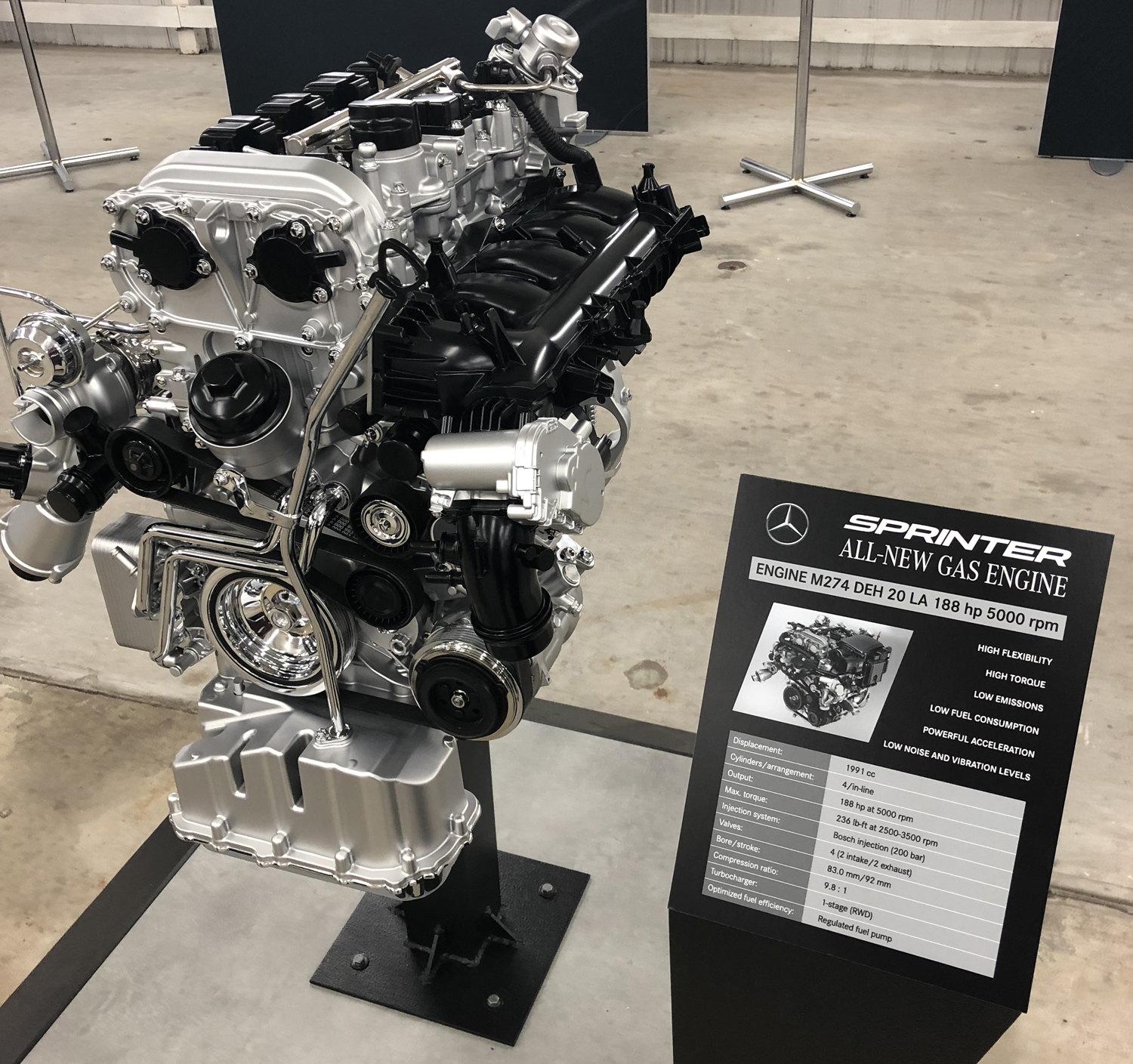
EMKAY recently attended an event centered on the Mercedes Sprinter and what the coming years will bring. One major change? A gas engine is now available. As other manufacturers began offering similar vehicles, the Sprinter’s US sales declined, as they only offered a diesel engine. While these engines are far more popular across the pond, the US’s inclination for gas engines caused people to look at other options, such as the Transit, Promaster, or NV. Official MPG stats are still forthcoming, but the in-line 4-cylinder engine generates 188-hp and 236 lb-ft of torque.
Mercedes will build the vans in their new plant in North Charleston, SC. This new facility is dedicated solely to Sprinter van production. With the different body styles, powertrains, and equipment offerings, Mercedes states there are over 1,700 different combinations for the Sprinter. The facility is still getting up to speed, but Amazon helped to propel early numbers by placing an order for 20,000 vans.
The Sprinter is also getting some updated driver assistance equipment, such as autonomous emergency braking, rear cross traffic alert, adaptive cruise control, and a 360-degree camera. The cabin has also been redesigned into an all-new layout. The standard 4.3” screen can be upgraded to a 7” or 10” screen, all of which include the voice command feature. Optional paddle shifters offer more torque control, though we found them to be a bit lagging, at least on the diesel engine quipped model we tested.
All Sprinters will also be equipped with a standard tracking system that offers the ability to track over 200 vehicle data points and driver behaviors. Fleet management companies will have the option to incorporate the data feed into their operating system.
Mercedes also highlighted their Metris van, which was released to compete with the smaller US offerings vans such as the Transit Connect and the Promaster City. They’re also offering an extended wheelbase Metris that boasts an additional 9” of wheelbase for even more cargo capacity.
An all-electric eSprinter is also expected in the near future, but Mercedes didn’t confirm whether it would be available in the US or not.
Sep 2018
Tesla’s Electric Vehicle Tax Credits Reach Phase-Out Period
Earlier this year, Tesla reached their limit for the Federal electric vehicle tax credit program. Under the program, each manufacturer’s first 200,000 EVs or plug-in hybrids are eligible for a tax credit of up to $7,500. Upon reaching the 200k mark, these incentives are cut in half every six months until no incentives remain.
Tesla reached the 200,000 vehicle threshold back in June, so their clock has started. They’re currently in the last full quarter in which the full credits will be applied. The remaining credits on their vehicles will be applied as follows:
As of January 1, 2019 -Rebates are reduced from $7,500 to $3,750
As of July 1, 2019 – Rebates are again cut in half to $1,875
January 2020 and beyond – No rebates for Tesla buyers
Tesla is currently arguing that this puts them at a disadvantage compared to their competition, but no major change is expected in the credit offerings. A bill was recently introduced that would extend these credits past the 200,000 limit, but it’s in the very early stages and has yet to even pass the House.
Tesla’s argument comes as no surprise, as other luxury manufacturers (Audi, BMW, Mercedes-Benz, and Jaguar) are just beginning their EV endeavors, so they have the majority of their tax-credit-eligible vehicles remaining.
GM is near the 190,000 mark, meaning they should hit the cap in the coming months. A bit behind them at 120,000 is Nissan as well as Ford at 109,000.
Aug 2018
IIHS Study Proves Advanced Safety Tech Still Requires the Human Hand
Advanced safety features are being added as standard options on many vehicles, and as available options on almost all new vehicles. Some of the more common ones include adaptive cruise control and active lane-keep assist. And while these systems can be beneficial, it’s not as simple as just sitting back and letting the vehicle take full control.
The Insurance Institute for Highway Safety (IIHS) recently put some of these features to the test, and their findings revealed that these systems have some room for improvement. IIHS tested some of the better rated systems, which included Tesla Model S and 3, the BMW 5-Series, Mercedes E-Class, and the Volvo S90.
An example of these issues can be seen when looking at a road test with the 5-Series. In regards to the lane-keep assist test, “The 5-series steered toward or across the lane line regularly, requiring drivers to override the steering support to get it back on track. Sometimes the car disengaged steering assistance on its own. The car failed to stay in the lane on all 14 valid trials.”
It was also found that slow moving vehicles can impact how the lane-keep assist operates.
“When a car is traveling too slow to track lane lines, active lane-keeping systems use the vehicle in front as a guide. If the lead vehicle exits, the trailing car might, too.”
While these safety features do provide an overall benefit to the driver and others on the road, it’s important to also realize that you must remain alert and in control when using these features.
A link to the full article on the IIHS website is below:
Thank you for your interest in EMKAY, we will try and get back to as shortly as possible.
Our site uses cookies so that we can remember you and understand how you use our site. If you do not agree with our use of cookies, please change the current settings in your privacy preferences. Otherwise, you agree to the use of the cookies as they are currently set.
This website uses cookies to improve your experience while you navigate through the website. Out of these cookies, the cookies that are categorized as necessary are stored on your browser as they are essential for the working of basic functionalities of the website. We also use third-party cookies that help us analyze and understand how you use this website. These cookies will be stored in your browser only with your consent. You also have the option to opt-out of these cookies. But opting out of some of these cookies may have an effect on your browsing experience.
 Details on the all-new 2020 Corolla have been released and there were some major changes to the look and feel of this vehicle. Both the hatchback and the sedan models are both built on the Toyota New Global Architecture (TNGA), which according to Toyota, “[brings] together new approaches to engineering, design, assembly, and materials.”